Collagen supplements are everywhere these days, promising firmer skin, stronger joints, and healthier hair. But not all collagen is created equal. If you’ve come across the term “collagen tripeptide” and wondered how it stacks up against regular collagen, here’s a straightforward breakdown.
What Is Normal Collagen?
Collagen is the most abundant protein in the human body, forming the structural framework of skin, bones, tendons, and cartilage. “Normal” collagen supplements typically come in two forms:
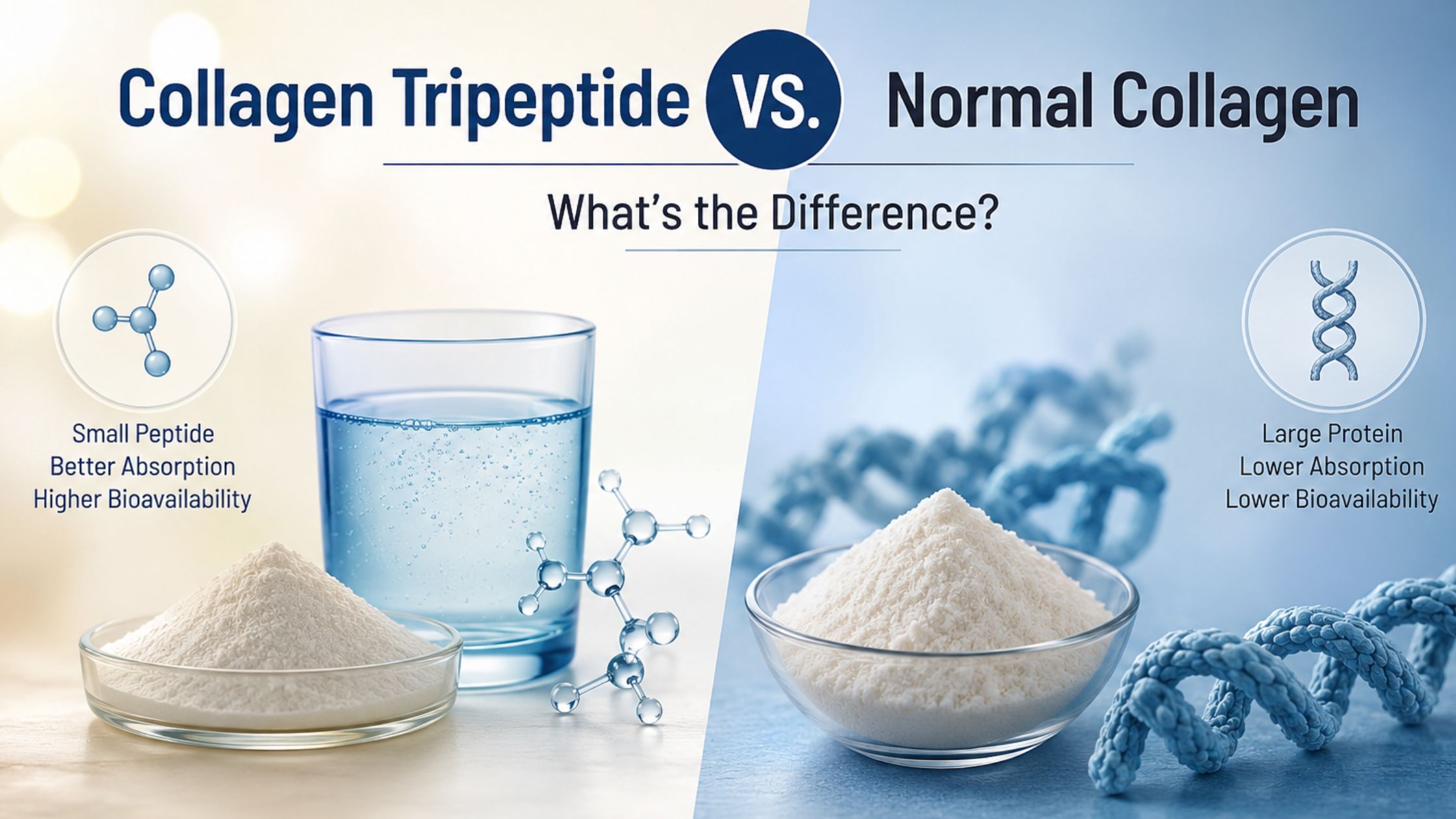
- Native collagen: The large, intact protein molecule, which is difficult for the body to absorb because of its size and complex triple-helix structure.
- Hydrolyzed collagen (collagen peptides): Collagen broken down through hydrolysis into smaller chains of amino acids, usually made up of several peptides of varying lengths. This is the most common form found in powders and drinks.
While hydrolyzed collagen is far more absorbable than native collagen, the peptide chains can still vary widely in size, which affects how efficiently the body can use them.
What Is Collagen Tripeptide?
Collagen tripeptide (CTP) takes hydrolysis a step further. Instead of stopping at medium-length peptide chains, manufacturers break the collagen down to its smallest functional unit: chains of just three amino acids, most commonly the Gly-Pro-Hydroxyproline sequence.
This ultra-small molecular size is what sets tripeptides apart. Because they’re already broken down to near-elemental form, they require minimal digestive processing before entering the bloodstream.
Key Differences
1. Absorption Rate Collagen tripeptides are absorbed significantly faster and more completely than standard hydrolyzed collagen peptides, which can contain chains of 3-6+ amino acids. Studies suggest tripeptides can enter the bloodstream largely intact, bypassing much of the breakdown process needed for larger peptides.
2. Bioavailability Because of their small size, tripeptides show higher bioavailability, meaning a greater percentage of what you consume actually reaches your tissues rather than being lost during digestion.
3. Targeted Skin & Joint Benefits Research points to tripeptides directly stimulating fibroblast activity in skin cells, encouraging natural collagen and hyaluronic acid production more efficiently than larger peptide fragments.
4. Manufacturing Complexity and Cost Producing collagen tripeptide requires more advanced enzymatic hydrolysis and purification, making it more expensive to manufacture than standard hydrolyzed collagen. This is usually reflected in the price of finished supplements.
5. Taste and Solubility Tripeptides tend to dissolve more easily in water and have a milder taste, which is why they’re often used in beverages and cosmetic-grade formulations.
Which Should You Choose?
For general wellness and budget-friendly supplementation, standard hydrolyzed collagen peptides remain effective and well-researched. If absorption speed, premium skin benefits, or joint support are the priority — and cost is less of a concern — collagen tripeptide offers a more refined, efficient option.